
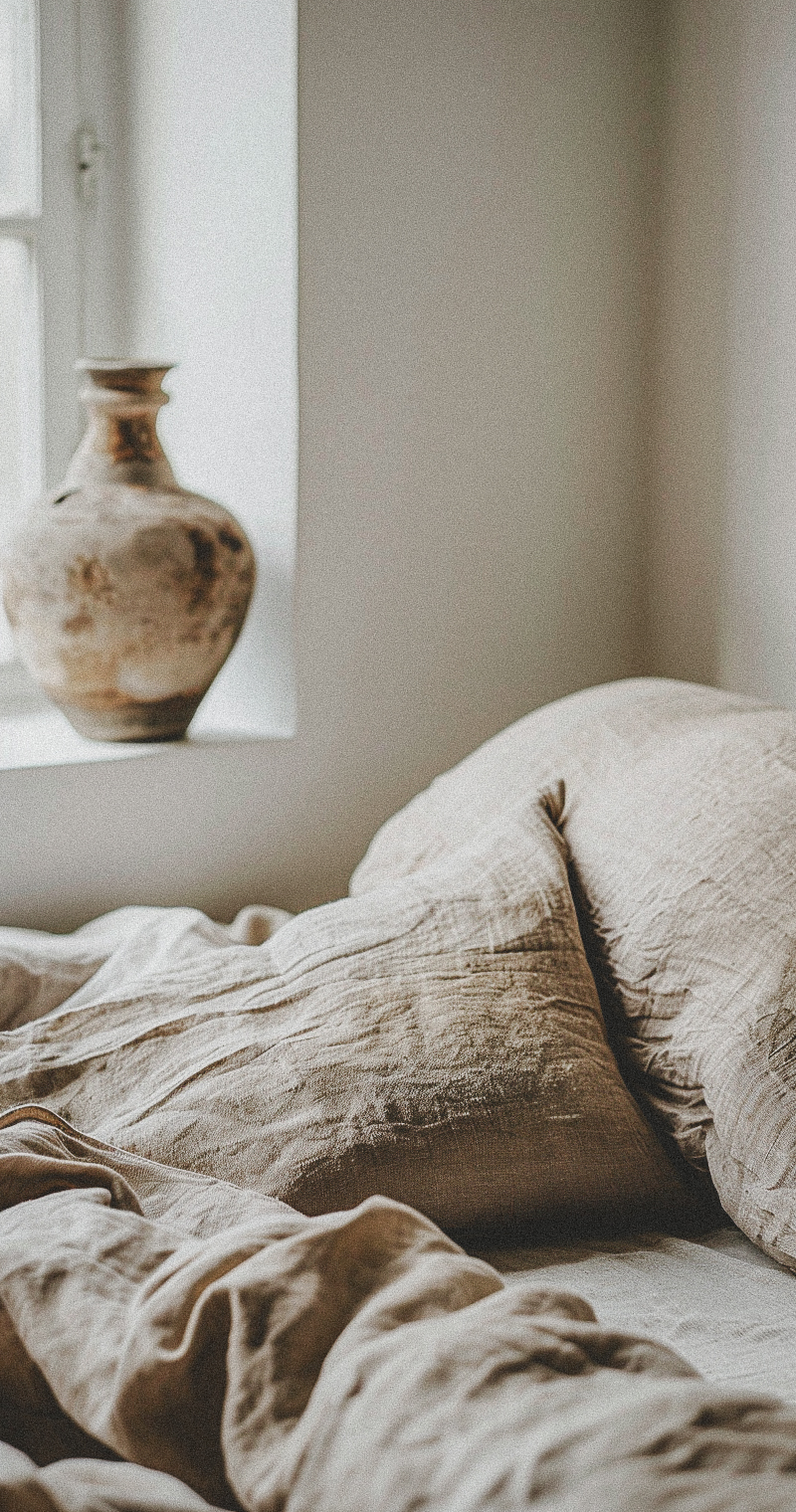
A DESIGNERS Fabric
The perfect imperfection.
“Linen taught me that style doesn’t need to be loud. It’s a very relatable textile. It needs to feel lived-in, lasting, and true. It’s how I live — natural, textured, little bit crumpled! And never trying too hard…”
creator maison 1973, Nic Tierney

A Linen LOVE Affair
There’s something about linen. For those of us who appreciate texture, craftsmanship, and understated luxury, linen isn’t just fabric – it’s a feeling.
Having worked in home textiles and product design for some of the biggest brands in Australia and globally, our team here at maison 1973 have seen countless materials come and go, but linen? Linen simply endures. It tells a story of heritage, of artisanship, and of an unwavering place in modern interior design.
But what makes it so special? Why are designers, stylists, and consumers alike so drawn to this humble yet exquisite fabric?
This is a deep dive into linen’s rich origins, its many uses, and why it has become the cornerstone of modern interiors and clothing. We consider this a little love letter to our forever favourite textile.


A Fabric Steeped In HISTORY
Linen is one of the oldest textiles in the world, dating back over 36,000 years. Archaeological finds suggest that flax fibres were woven into fabric long before the pyramids of Egypt were even conceived. The ancient Egyptians revered linen, using it for everything from garments to burial shrouds—reserved, of course, for the elite and the sacred. Linen symbolised purity and wealth, often used to wrap mummies because of its natural preservation qualities. (Source: The Metropolitan Museum of Art)
Fast forward to medieval Europe, and linen became a household essential. France, in particular, became a hub for the finest linen production, perfecting the craft through centuries of weaving. To this day, the French province of Normandy remains one of the world’s most renowned sources of flax, known for its exceptional quality and durability.
A maison 1973 fun fact? The term linens—referring to bed sheets and household textiles—comes from the fact that linen was the main material used in home textiles before cotton and synthetic fibres became popular.

The ART of Weaving: What Makes Linen So Unique?
From a designer’s perspective, linen is unmatched in both aesthetics and performance. But what makes it so special?
Durability & Strength: Linen fibres are up to three times stronger than cotton, which is why linen sheets, when cared for properly, can last for decades. Over time, rather than wearing out, linen softens – offering a luxurious lived-in feel.
Breathability & Comfort: Ever wondered why linen sheets feel cool in summer yet cosy in winter? Linen’s natural fibres allow air to circulate, regulating temperature and wicking away moisture better than any other textile. (Source: National Sleep Foundation)
Sustainability: Linen is one of the most eco-friendly fabrics available. Flax requires far less water than cotton, thrives without heavy pesticides, and every part of the plant is used – meaning zero waste. With sustainability becoming a non-negotiable in modern design, linen is leading the way.
Linen in MODERN Interior Design: A Love Affair That Lasts
For those of us with a keen eye for interiors, there is no denying that linen is an essential element of contemporary styling. It’s loved by top designers and stylists for its relaxed yet refined appeal. Let’s explore it’s varied uses:
Linen Bedding: The Ultimate Everyday Luxury
There’s a reason why luxury bedding brands such as Cultiver, Hale Mercantile Co, Carlotta & Gee, Bedouin Societe, bedtonic and Piglet in Bed (to name just a few from our long list of favourites) are championing linen sheets. Linen bedding is effortlessly chic, breathable, and hypoallergenic, making it perfect for year-round comfort.

We love layering our linen, and also opting for heavier linen bed covers that provide a cosy and inviting atmosphere to our bedrooms. Adding lightweight throws in complimentary colours not only enhances the visual appeal but also offers versatility during fluctuating temperatures. We love to add cushions in an array of sizes and textures—think bolsters and larger size euros—that create an eclectic yet harmonious look. We also use our euros as couch cushions (instead of the standard smaller sizes) as we love the aesthetic and overall comfort they provide.

image source: Pinterest
Our Design Tip: For a stylish, layered look, maison 1973 enjoys using neutral linen shades – like warm whites, oat, soft greys, and classic earth tones. This combo gives a laid-back, upscale vibe. The great thing about linen is how relaxing and easy it feels in any home, whether it’s a beach house, a city apartment, or a farmhouse.
It truly is super versatile.
Linen Upholstery: Texture That Elevates a Space
Linen-covered sofas and armchairs are becoming a signature in modern European and Australian homes. Unlike synthetic fabrics that can feel heavy or overly structured, linen upholstery adds an organic softness, aging beautifully over time.
Brands championing linen upholstery and our favourites:
- MCM House (Australia) – Known for their iconic linen sofas that exude effortless elegance.
- Maison de Vacances (France) – Blending relaxed linen textures with Parisian sophistication.
Our Design Tip: We always seem to pair our linen-upholstered furniture with natural materials like timber, stone, and wool for a warm, organic feel.
Linen CURTAINS: Softness & Light Filtering
Heavy curtains can feel overwhelming and sometimes out dated for our more contemporary style of homes nowadays, but beautiful, lightweight linen curtains bring a breezy, understated luxury to any space. They allow soft light to filter through while maintaining privacy, making them perfect for modern, minimalist homes.
Our Design Tip: For styling, we always choose extra long linen curtains in soft neutrals (or washed-out pastels) to create an airy, European-inspired aesthetic. Our pick are from Cultiver.

“After all, I was dressed in linen and so retained a certain capacity for nonchalance.”
Author, Joanna Ruocco

Beyond Interiors: The EVERYDAY Beauty of Linen
Linen isn’t just for the bedroom or living room. It finds its way into every corner of a thoughtfully designed home:
Linen Napery & Tablecloths – The easiest way to elevate a dinner setting, linen belongs in the kitchen and dining space just as much as it does in the bedroom or living area – perhaps even more so. A softly rumpled linen tablecloth instantly transforms a meal into a bit more of a special moment, and linen napkins add both beauty and functionality to everyday tasks. Unlike synthetic fabrics, linen absorbs better, dries faster, and only gets softer with each wash, making it a natural choice for those who appreciate quality that lasts. Whether draped over a rustic wooden table or neatly folded beside a plate, linen in the dining space speaks to an effortless kind of elegance – one that values texture, tradition, and the quiet luxury of well-made things. We love and use these Cultiver napkins often.
Our Design Tip: We love using our linen tablecloth as a fun throw for outdoor picnics and bbq’s. It’s super lightweight, easy to carry around, and a breeze to clean, plus it always adds a nice little luxurious touch!
Linen Tea Towels – Lightweight, highly absorbent, and naturally quick-drying. We love and use these Cultiver tea towels everyday.
Linen Towels – Again, so lovely and lightweight, absorbent, and naturally quick-drying, linen towels add such a stylish addition to any bathroom. We adore these Hale Mercantile towels and use them everyday in our bathrooms.
Linen Loungewear – There’s nothing quite like arriving home after a long day at work, enjoying a refreshing shower, and slipping into some stylishly comfortable PJ’s. The latest linen loungewear is not only comfortable, but also serves beautifully as chic daywear—perfect for grabbing a coffee (in our favourite linen pants and shirt by Jasmine & Will)—absolutely! We also have this gorgeous and versatile linen shirt by Carlotta & Gee on high rotation.
Linen Clothing – Wearing your favourite linen feels so easy. A white linen shirt, slightly oversized, gives off a relaxed, confident vibe – structured yet soft, timeless yet modern. Flowing linen dresses, like our beloved ones from Seaside Tones, perfectly embody ‘stylishly undone’. The charm of linen clothing lies not only in its comfort but also in how it elevates even the simplest outfits, making them feel effortless and stylish. True style isn’t about trying too hard – it’s about wearing what feels like you.
“I have more linen pieces than I care to admit. An oversized linen shirt is a part of my signature style, all year round. Perfect for travelling, they are indestructible. The older, the better I say!”
creator maison 1973, Nic Tierney


Caring for Linen: A Designer’s ADVICE
Investing in linen means knowing how to care for it properly. Unlike synthetic fabrics, linen gets better with time – but only if treated well.
These are how we have cared for our linen over the years and it still looks (and functions) like the very first day we bought it:
- Wash in cool or lukewarm water (never hot) – to preserve the fibres.
- Use a gentle detergent – harsh chemicals can break down the natural structure of linen.
- Air-dry whenever possible – for that effortless, organic ‘lived in’ texture.
- Embrace the wrinkles – linen isn’t meant to be perfectly pressed. The beauty is in its relaxed imperfection.
Why Linen Will Always Be TIMELESS
For those of us who appreciate authenticity in design, linen represents effortless elegance, history, and sustainability in one fabric. It’s not just a passing trend – it’s a timeless textile that has been, and will always be, a hallmark of understated luxury.
Over the years we have been inspired by many wonderful textile designers, but few voices in the world of design have the depth, foresight, and influence of Lidewij Edelkoort. A true pioneer in trend forecasting, textile innovation, and sustainability, she has spent decades shaping the way we see fashion, interiors, and the materials that surround us. Her ability to anticipate the future – while deeply honouring craftsmanship and heritage – has made her one of the most respected minds in the industry and someone we have always loved to be inspired by. Over the years, we have had the privilege of attending her seminars and reading her trend books and colour forecasting. They are always insightful and a joy to consume.
As a lifelong advocate for natural fibres and slow design, Lidewij Edelkoort. has often spoken about the enduring value of linen – its ability to bridge past and future, tradition and modernity. Her trend agency, Trend Union, continues to influence global fashion, homeware, and sustainability movements. We simply love her design philosophy and her eye for detail.


The Maison 1973 Takeaway:
So whether you’re investing in beautiful linen bedding, a timeless linen sofa, or just a set of perfectly rumpled linen napkins, you’re not just buying fabric, you’re buying into a legacy – one that tells stories of the past, while seamlessly fitting into the modern world.